
-
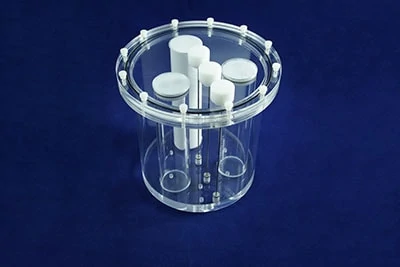 Main application of Pro-NM NEMA 94 is PET acceptance testing with NEMA standard. Evaluation of count rate, uniformity, scatter fraction, attenuation compensation, and scatter compensation of ECT systems.
 -
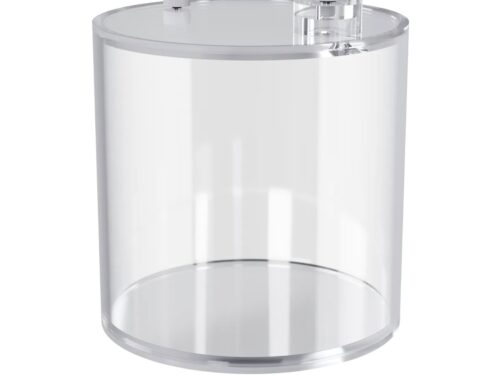 Cylindrical water phantom with a dedicated infusion spot. The cylinder can be used to examine reconstructed images (tomography slices) for uniformity, artifacts, activity concentration, and similar purposes.
 -
 This SPECT dedicated phantom can be used to produce images similar to those obtained in a whole body tomographic imaging study, with hot and cold lesions and a large cold region representing the lung.
 -
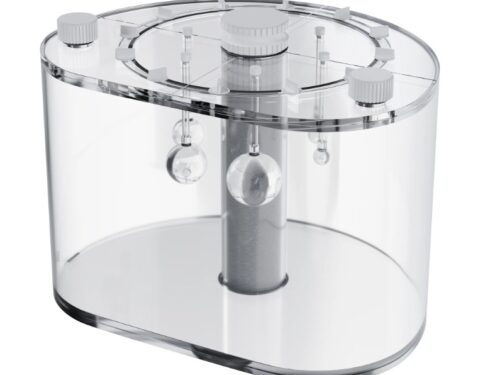 The phantom for evaluating performance of positron emission tomographs (PET). Recommended for use in the evaluation of reconstructed image quality in whole body PET imaging.
 -
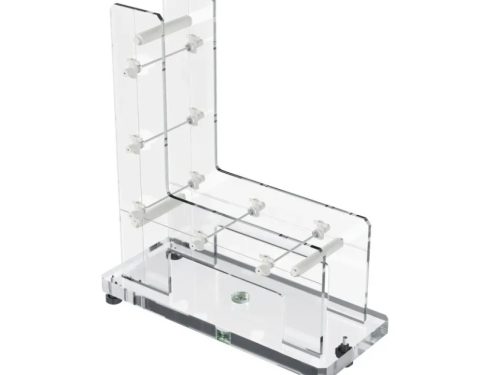 A phantom for evaluation of spatial resolution of positron emission tomographs (PET). It is used to characterize the widths of the reconstructed image point spread functions (PSF) of compact radioactive sources. It has been designed in accordance with the NEMA Nu 2-2012.
 -
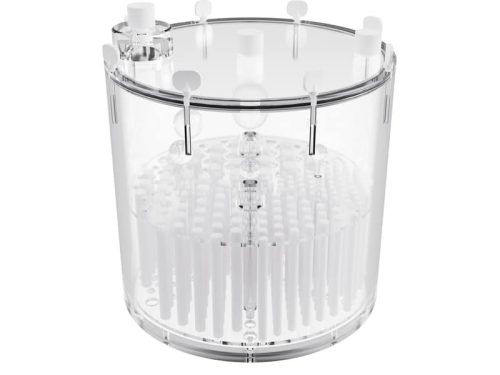 The phantom for performance evaluation of small animal systems or ultra-high resolution ECT systems.
 -
 The phantom for NM systems performance evaluation: routine quality assurance tests, as well as extensive acceptance tests. It can be used to evaluate: pixel size, spatial linearity, RMS noise, signal to noise ratio (SNR), slice width, uniformity, spatial resolution, point spread function, slice position verification, slice incrementation, accuracy, center of rotation, verification, volume sensitivity and low contrast sensitivity.
 -
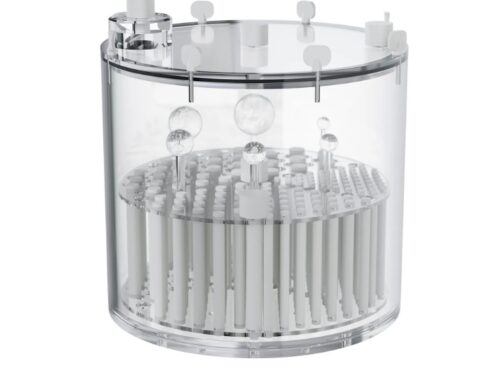 The phantom for NM and PET systems performance evaluation (collimator, artifacts, calibration, reconstruction parameters). It can be used to evaluate, for example: center-of-rotation error, non-uniformity artifacts, changes of radius-of-rotation on spatial resolution, reconstruction filters on spatial resolution, attenuation and scatter compensation.
 -
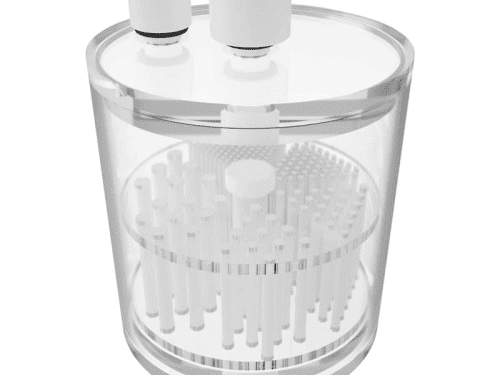 The phantom for performance evaluation of small animal systems or ultra-high resolution ECT systems.
 -
 The phantom for small FOV NM and PET systems performance evaluation (collimator, artifacts, calibration, reconstruction parameters)
 -
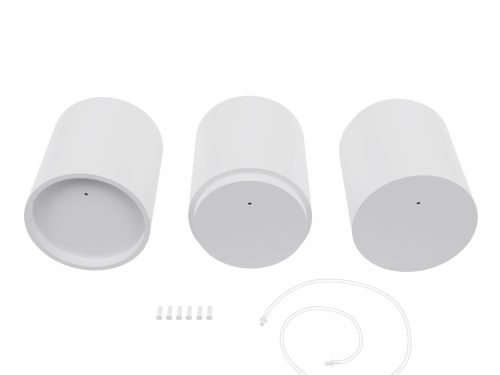 The PET scatter phantom is an acceptance testing tool used to determine the imaging systems relative sensitivity to scatter radiation. It can be used to measure the effects of dead-time and the effects of random events generated at different levels of activity of the line source.
 -
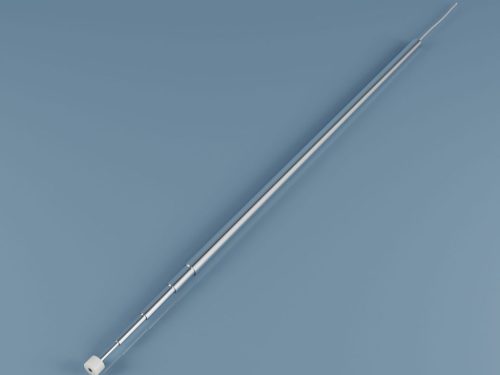 The PET sensitivity phantom is used to measure the sensitivity or ability of positron emission tomographs to detect positrons. The phantom used for this purpose is a set of five metal tubes with a similar wall thickness.