
-
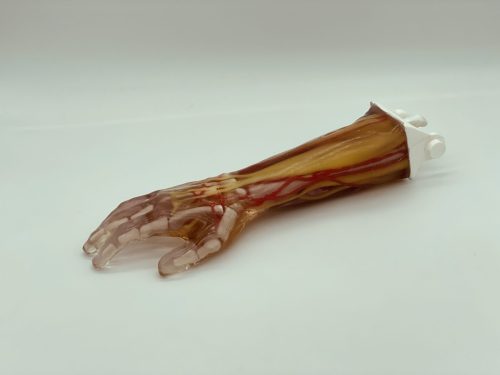 The Adult Arm (Advanced) is a life-size and realistic phantom designed around the average anatomy of a human arm, including bones, tissues, ligaments, and tendons. It is compatible with X-Ray/CT and Ultrasound imaging, making it an excellent tool for studying, researching, and testing medical imaging devices. The phantom allows for the examination of various diagnostic procedures in different orientations and positioning techniques.
 -
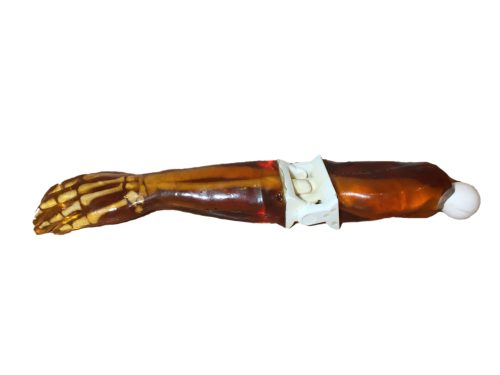 Adult Arm for X-Ray/CT and MRI is a part of our Adult Full Body Phantom for X-RAY/CT and MRI training [FB-A01] that can be purchased independently. This arm phantom has a joint at the elbow for flexibility and motion. It connects the lower arm with the upper arm. These two parts can be disarticulated as per needs.
 -
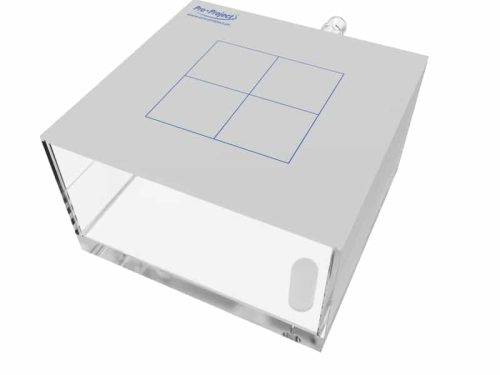 The stationary water phantom for high energy photon dosimetry with all types of ionization chambers.
 -
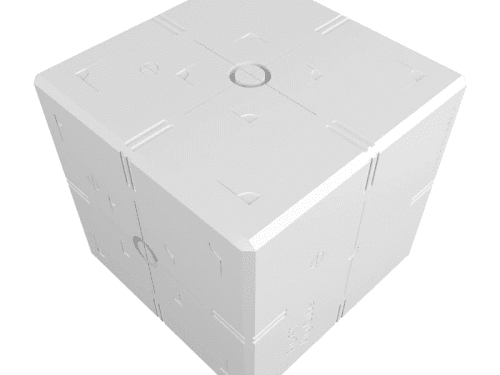 Simple to use and economic tool to perform true spatial alignment and coincidence tests on IGRT systems. Pro-RT Align-Cube contains engraved markings on the exterior and radiographic markers inside. The isocenters of both the OBI and the EPID can be checked for true spatial alignment and coincidence with that of the treatment beam. The phantom ensures the accuracy of linacs’ image-guidance systems, including CBCT, x-ray volumetric imaging (XVI) and on-board imaging (OBI). It can be used to test: 3D cone beam registration kV and MV system coincidence kV and MV projection images laser and light field coincidence weekly remote table adjustments
 -
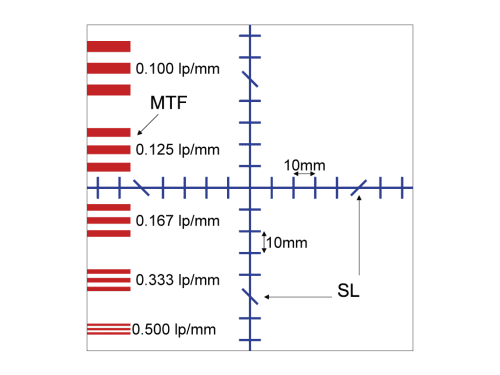 This phantom is designed for quality control of a CT simulator, which usually consists of a CT scanner, virtual symulator software and a laser marking device (marking the centre of target volume). Since geometrical planning is the core of CT simulation, periodic quality control is essential for maintaining optimum image quality and patient care. The phantom allows performing detailed geometry and table movement tests as well as image quality assessment - low contrast resolution and high contrast detectability.
 -
 Pro-RT IsoBeam This is a multifunctional, precision quality assurance tool for daily, weekly or monthly quality assessments of all mechanical and geometrical treatment parameters of linear accelerators or teletherapy units. It is designed to easily and accurately check collimator isocentricity, gantry isocentricity, table isocentricity, collimator field size accuracy, radiation/light field congruence, isocenter rotational stability, ODI accuracy and laser light alignments.
 -
 Pro-Water Plates makes radiation beam calibration easier than ever. With improved uniformity and durability, Pro-Water Plates enables precise, accurate and effective Quality Assurance. Pro-Water Plates mimics true water within 1% accuracy, supporting accurate calibration for zadiotherapy beams.
 -
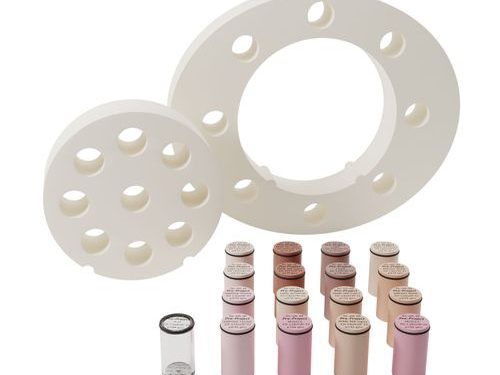 The Pro-RT ED phantom is used to account for tissue heterogeneity in radiotherapy treatment planning. It can be used to define the precise correlation of CT data to the electron density of various tissues. The phantom consists of two nested disks that represent the head and abdomen. Nine different tissue equivalent electron density plugs can be positioned at 17 different locations within the scan field. Included is a water vial plug that can be filled with any fluid. Optional distance marker plugs enable quick assessment of the CT scanner’s distance measurement accuracy.
 -
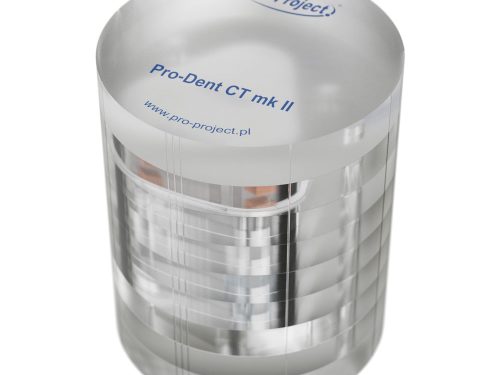 The new Pro-Dent CT mk II phantom is a versatile quality control tool of dental Cone-Beam CT, Dental Volume Tomography (DVT) and other 3D imaging devices according to the Radiation Protection Report no 172 by SEDENTEXCT. The phantom consists of a main PMMA cylinder that houses modules with different test objects. Thanks to this design, you can perform tests with devices with a small FOV at different positions in the 160 mm phantom.
 -
 Phantom for acceptance and constancy testing of 3D function of dental Cone-Beam CT, Dental Volume Tomography (DVT) and 3D imaging devices according to DIN 6868-161 and QS-RL.
 -
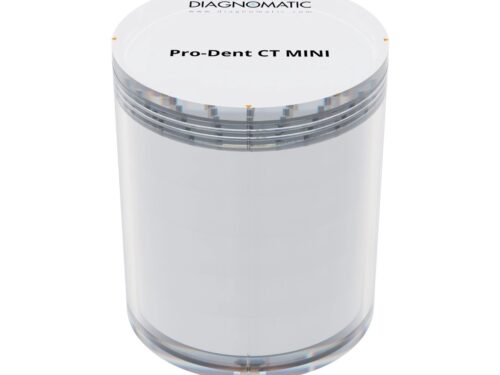 Pro-Dent CT MINI phantom is a versatile quality control tool of dental Cone-Beam CT, Dental Volume Tomography (DVT). and other 3D imaging devices.
 -
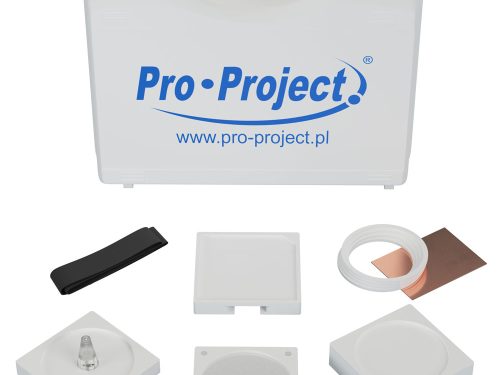 The Pro-Dent set is a universal set of phantoms for carrying out constancy and acceptance tests of conventional and digital dental X-ray units (intra-oral, panoramic and cephalometric).